

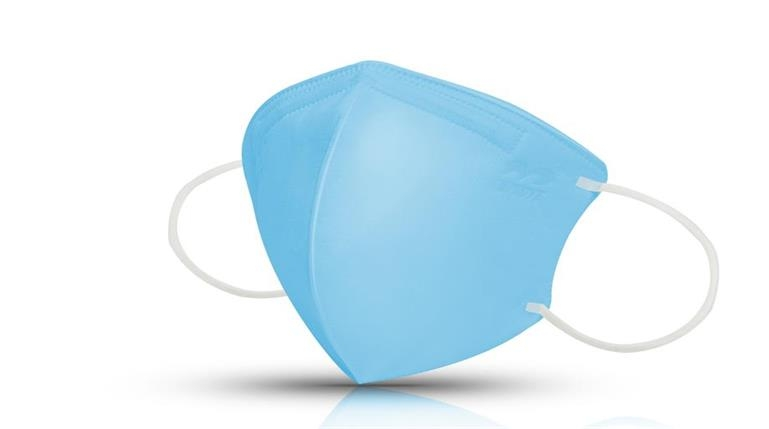
As a mechanical barrier, surgical masks can interfere with the air flow directly into and out of the breathing holes (i.e. nose and mouth). The most commonly used surgical masks are designed to capture only respiratory droplets, so they cannot filter or block small airborne particles that are smaller than the designed filter level. These particles may be transmitted through coughing, sneezing, unintentional spitting while talking or some aerosols. Generate medical procedures (such as bronchoscopy, laryngoscopy, or dental procedures). The surgical mask also cannot provide complete bacterial protection and other pollutants, because the edge of the mask and the face of the wearer are often loosely matched, especially when the mask is completely incorrectly worn (for example, the nose and/or mouth are exposed to the low position).
The surgical mask is a disposable device that can form a physical barrier between the wearer's respiratory opening (nose and mouth) and the potential pathogenic pollutants in the surrounding environment. If properly worn, surgical masks are designed to help prevent most, if not all, of the large droplets, splashes, sprays or splashes that may contain viruses and bacteria from entering the wearer's nose and mouth., On the contrary, it is also an effective barrier to block large droplets released from the wearer's mouth and nose. Surgical masks can help reduce the exposure of the wearer's saliva and respiratory secretions to others, otherwise these secretions may spread to 7.9 meters (26 feet). The surgical mask also reminds the wearer not to touch his mouth or nose, otherwise it may spread viruses and bacteria after contacting the contaminated surface.
Surgical masks should not be confused with respirators (specifically rated for submicron particles) and are not certified. The surgical mask is not designed to protect the wearer from breathing bacteria or virus particles in the air, and is not as effective as the respirator designed for this purpose. When measured with NIOSH certified test parameters, the collection efficiency of surgical mask filters from different manufacturers can vary from less than 10% to nearly 90%. However, a study found that even for surgical masks with "good" filters, 80-100% of the subjects failed to pass the OSHA qualitative fitting test, and the quantitative test showed 12-25% leakage.
The surgical mask is designed to be worn by health professionals during surgery and certain medical care procedures to capture the micro-organisms in droplets and aerosols flowing from the wearer's mouth and nose. Evidence supports the effectiveness of surgical masks in reducing the risk of infection among other medical personnel and communities. However, a review by Cochrane found that there was no clear evidence that disposable masks worn by surgical team members would reduce the risk of wound infection after clean surgery.
Medical staff received training on how to wear, handle, remove and dispose of surgical masks. For medical staff, the safety guidelines recommend that N95 or FFP3 respirators with facial fit test be worn near pandemic influenza patients, rather than surgical masks, to reduce the risk of contact with potentially infectious aerosols and droplets in the air.